
Special places
I enjoy web sites that speak about their authors’ special regard for places, and I collect some favourite examples here. I hope you too enjoy my little collection.
Warning: some of these sites are rich and complex — you weren't planning to do anything else today, were you?
A map of massacres
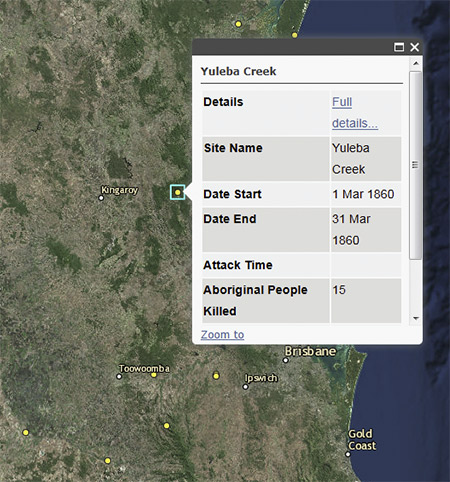
Colonial frontier massacres in eastern Australia 1788–1872 is an online map that plots the sites where massacres are known to have been perpetrated.
From the moment the British invaded Australia in 1788 they encountered active resistance from the Aboriginal and Torres Strait Islander owners and custodians of the lands. In the frontier wars which continued until the 1960s massacres became a defining strategy to eradicate that resistance. As a result thousands of Aboriginal men women and children were killed. This site presents a map, timelines, and information about massacres in Eastern Australia from 1794 when the first massacre was recorded until 1872. Only events for which sufficient information remains from the past and can be verified are included. The map also includes information about the six known massacres of British colonists in Eastern Australia in the same period.
—from the introduction to the website
This site comes with a warning that it contains information about acts of violence that may be distressing. Yes, the information is distressing—but necessary.
Lighthouses for aeroplanes
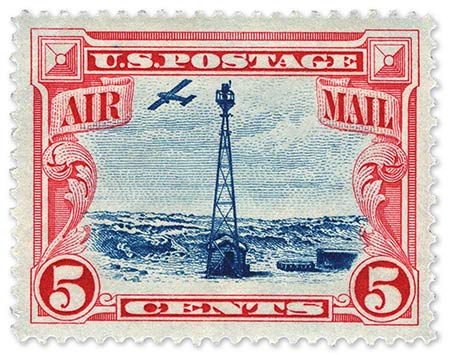
Concrete arrows and the US airmail beacon system is a post on the Sometimes interesting blog describing a system that has left strange concrete arrows across the American landscape. In contrast to marine lighthouses which have stood for centuries and are still lit every night, these aerial navigation aids had a short service life.
In 1924 the US Postal Service began to build a network of giant concrete arrows which pilots could see from the air during daylight, with flashing lights on towers for night navigation. By 1933 radio direction-finding systems had been developed, and the beacon system became obsolete.
ArtMapping Venice
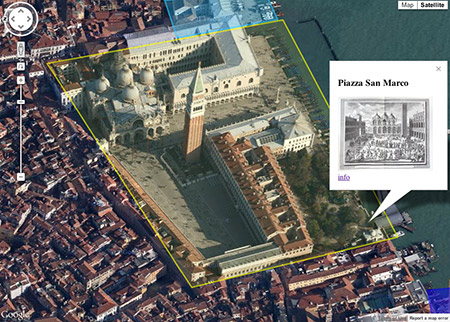
This is a blog about building a website to bring together historic artworks of Venice, maps to locate the places depicted, and tools to search and sort. It is the work of three students of Digital Humanities at the École Polytechnique Fédérale de Lausanne—Tania Palmieri, Ertan Kazikli and Orhan Ocal. The text is in English, heavily laced with acronyms: API, JSON, KML, XML and suchlike.
In ArtMapping Venice the authors explain their process of selecting which methods and tools to use. It is this work-in-progress aspect that makes it interesting for me—as well as the delights of the city and the artworks it has inspired.
TLV Buildings
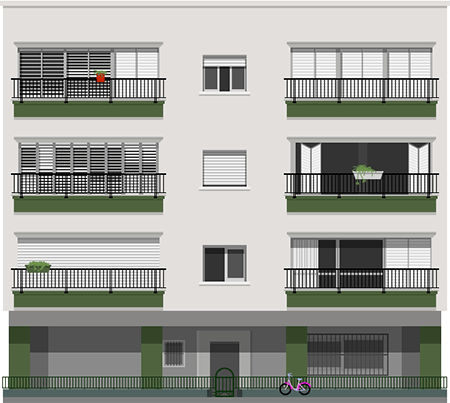
Avner Gicelter is a young designer from Israel. On the TLV Buildings blog he posts each week an illustration of a building from his home city. He says I want to share my love for Tel Aviv and its unique and stunning architectural styles.

 filed under Israel
Jackie Chan at the Old Museum
I don’t watch many martial arts action films, but this segment on YouTube caught my attention. It is set in the Old Museum Building in Brisbane, and uses the spaces of the exhibition hall for some exciting action. The exhibition hall was built in 1891, and was the home of the Queensland Museum from 1899 until 1986. I am doing some work on the building at the moment, which adds to my interest.
The clip is from the 1996 film Jackie Chan’s First Strike. More details are at the IMDb, where it rates 6.5 stars (out of 10).
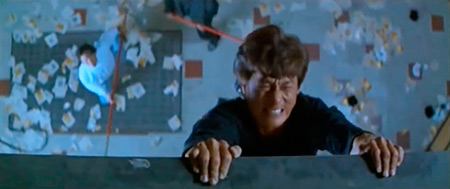
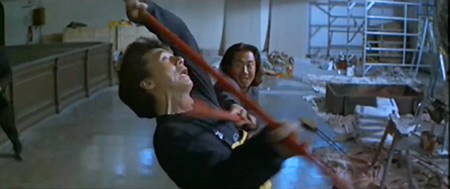
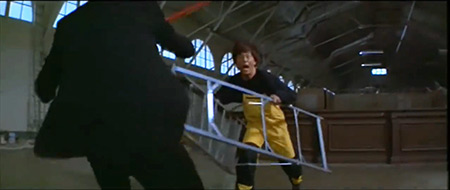
It’s great to see the Old Museum in a movie, but I’m not desperate to see the whole film. As the reviewer Roger Ebert says—It’s as if the movie has been made of, by and for 13-year-old boys, and while you watch it you feel like one. If I see the DVD in the video store I might even borrow it, and tickle my inner 13-year-old.
The age of buildings in the Netherlands
Broken link
The tools and the data for online mapping keep getting better. This web map was created by Bert Spaan using open cadastral data.
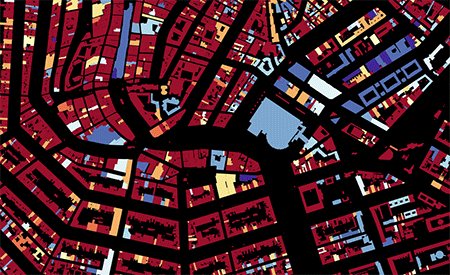
The map covers the whole of the Netherlands, and all of its 9,866,539 buildings. You can scroll and zoom all over the country.
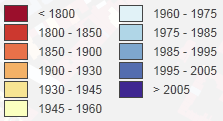
This site was pointed out to me by Thom Blake, who saw it on the MapBox blog.
filed under The Netherlands